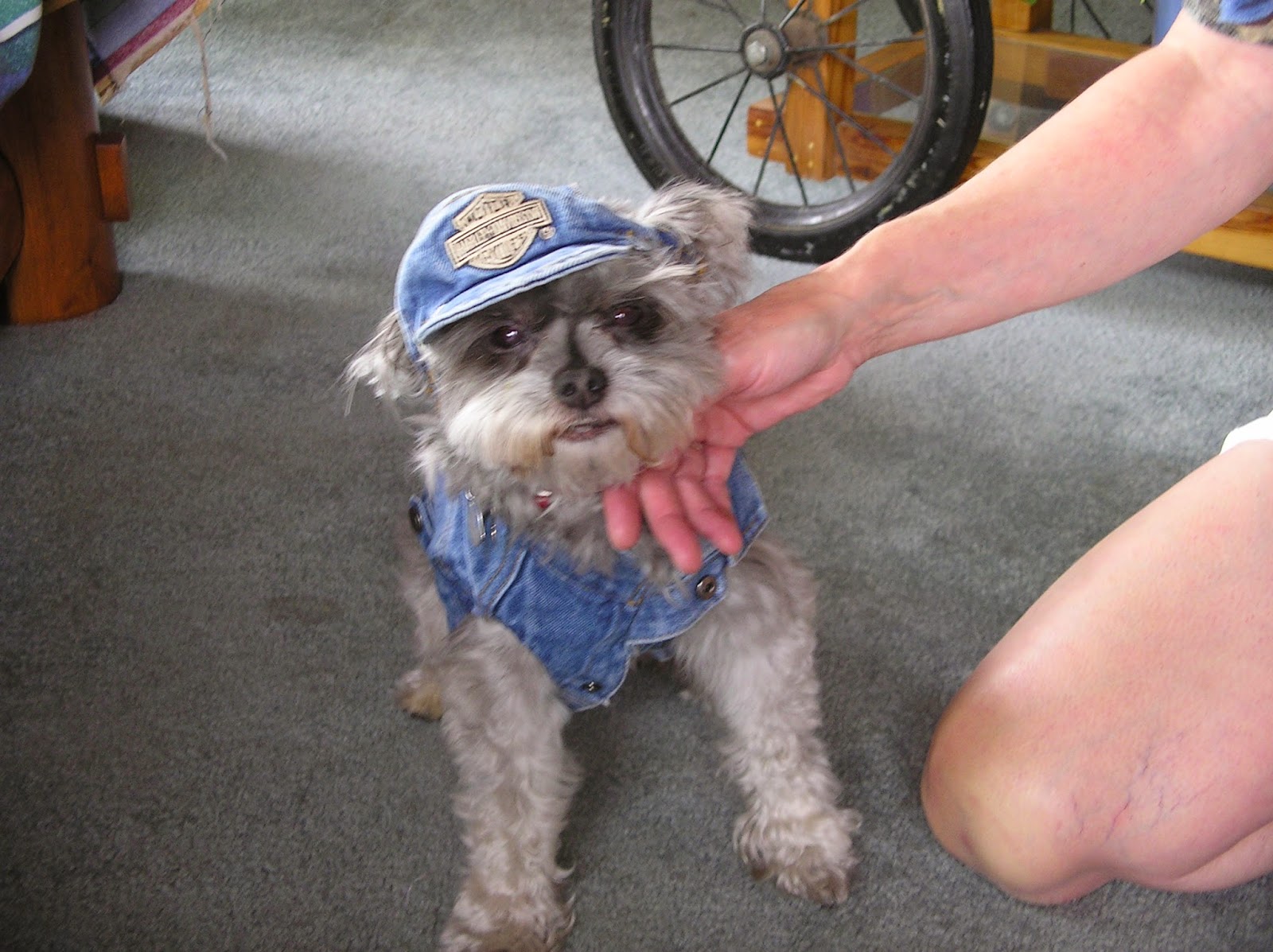
Monday, June 1, 2015

A Golden Walk for the Class of ‘65


Carolyn J. Rose       


Recently I received an invitation to return to Onteora Central High School in Boiceville, New York, and participate in the Golden Walk on graduation night.

My first reaction was, “Huh? 50 Years? That’s not right. I haven’t been out of high school for 50 years!”

But, yes, I have.

Fifty years ago this month I sweated with my classmates on a sunny slope in front of the school. The group photo shows us stuffed into gray chorus robes, caps on our heads, smiles on our faces. Some smiles seem serious, others goofy, others tinged with fear. 
We were, after all, going out into the wide world.


And, like now, it was a scary world. My high school years were marked by the Cuban Missile Crisis, President Kennedy’s assassination, the Berlin Wall, the publication of Silent Spring, civil rights marches and murders, the beginning of Nelson Mandela’s prison term, and growing concern about how deep we’d be sucked into the conflict in Vietnam.

I studied that graduation picture but, even with a magnifying glass, couldn’t make out which of the girls with brown hair was me. Caps shade our eyes, our images are tiny, and I have no memory of which row I was in, who I stood beside, and whether I left my glasses on.

I heard from a classmate I’ve been close to since we survived a second-grade teacher who, in our opinion, tortured more than taught us. She’s going, and hoping to persuade another long-time friend to come along.

For a day or so I was almost nostalgic enough to book a flight and join them for the walk and the festivities to follow. Then I put the idea aside. Not this year. Maybe next.

Before I deleted the invitation, I read it one more time and saw participants would meet at the loading dock before the ceremony. I’ve always thought of my high school as a utilitarian brick building. Functional. Not fancy. The loading dock was probably the most functional and least attractive area.

And yet, it seems right that those taking the Golden Walk will meet there. High school graduation was, after all, the event that moved us from the classroom and onto the loading dock for the lives we’d lead.


Thursday, April 30, 2015

You can’t lose it if you never had it.


Carolyn J. Rose


The bad news is that I was never much of a bowler. My high game is 150. My low games are better left unmentioned. The good news is—thanks to my grandfather—that 50+ years haven’t made me much worse than I was.

I was just a kid when the bowling alley went up near my home in the Catskills. I had vague ideas about what bowling involved, ideas gleaned from the duckpins we’d set up in the cellar on rainy days, and the trophies my grandfather won.

My grandfather was a wiry man who smelled like pipe tobacco and liverwurst sandwiches, garden soil and liniment. A natural athlete, he was good at swimming, skating, skiing, and other sports. But he didn’t trust to nature alone. He believed in practice. Lots of practice. Practice with the goal of steady improvement.

If my grandfather was at the bowling alley when I went to hang out there with friends, he would come over to critique my form. Frankly, there was a lot to critique. More frankly, I didn’t much care if I improved.

But my grandfather did. He saw that I lacked power and couldn’t manage a hook to save my life. So he tried to teach me to control the straight-on ball I threw. Often he had me start my approach at the scoring table and release the ball two yards behind the foul line. His thinking was that if I could control a ball rolling a greater distance, I’d do better when I released from the line.

When I couldn’t master the four-step approach he suggested, he agreed that three would do. He had me concentrate on getting low and laying the ball down as smoothly as I could.

It must have been painful for a man who could make the pins shake, rattle, and roll, to watch my ball ease its way down the alley, and make only a few pins wobble and fall. It must have hurt when I asked if he could just let me bowl for fun.

But I think he’d be proud that a few nights ago I went bowling with my neighbors. I would have been happy just to be there, wearing the shoes I got at a yard sale, rolling the ball I found at a thrift store, and listening to the thump and whump and clatter of balls and pins. But his lessons came back to me, and I managed, with my slow, straight-rolling ball, to lead the pack in the first game.

After that? Well, let’s just say I should have practiced a heck of a lot more than I did back in the day.

Monday, March 30, 2015

Walking the Doggerel.


By Mike Nettleton 

Official Doggerel of the U.S. National Poetry team.  
 
 Ah, Spring.  When I was a kid, I could always tell when Spring had arrived. My father would clear his throat and recite the following:
      Spring has Sprung,

the sap has riz.

       How I wonder where

       the birdies is. 


This, I came to find out, is a type of poetry known as doggerel. Webster says doggerel is:
         Loosely styled and irregular in measure. Esp for burlesque or comic effect. Marked by triviality or inferiority.

I’m not sure I’m buying that. Most of us are much more likely to remember these shorties but goodies than lines from The Wreck of the Hesperus or Ode on a Grecian Urn.

      Roses are red,

        Violets are purple.

        Sugar is sweet.

        And so is maple syrup-ull.


Or:

      A wonderful bird is the pelican

        His bill will hold more than his  belican

        He can take in his beak

        Enough food for a week

        But I’m damned if I see how the helican!

 That one is by a poet and humorist named Dixon Lanier Merrit. I’m sure he was a lot more fun at a party than Lord Byron or William Wordsworth.


The most famed doggerelist is probably Ogden Nash. This mid-twentieth century poet, author and playwright loved to play with words.  Here are a couple of my favorites:

      Candy’s dandy

        But Liquor’s quicker.

        (And sex doesn’t rot the teeth.)

 A Word to Husbands:      
       To keep your marriage brimming,

        With love in the loving cup,

        Whenever you’re wrong admit it;

        Whenever you’re right, shut up.

 And then there’s his tribute to the Burma Shave signs that used to line America’s highways.

Lather as you go:
Beneath this slab,

John Brown is stowed.

He watched the ads,

And not the road.

 Reading the doggerel on the Burma Shave signs used to be the highlight of any family cross-country trip. They were short, funny and easy to recite. Imagine the following series of six signs, spaced perhaps 100 yards apart.

         Every Shaver

           Now can snore

           Six More minutes

           Than before

           By using

           Burma Shave.

 The most famous doggerelistette may have been the acerbic-witted Dorothy Parker, famous for tossing off lines like:


        Men seldom make passes,

           At girls who wear glasses.

 And:

         I like to have a martini.

            Two at the very most.

            After three I’m under the table.

            After four I’m under the host.

 Carolyn and I had to smile on a recent visit to Camas, a small, artsy town along the Columbia River east of Vancouver. A sign outside a brewpub read:

        Rose are red,

           violets are purple.

           Poetry is hard.

           Let’s have a beer.

 You’re invited to submit your own favorite doggerel through the comments section on this blog.


Monday, February 16, 2015

Watching Bubba Age

Carolyn J. Rose 


In 2000, I spotted a small gray dog on the TV news segment designed to match potential owners with pets from the local Humane Society. She looked right into the camera and right into my heart. I raced down to Mike’s office yelling, “Get in the car. We’re going to get a dog.”

We’d been three months without a canine companion at that point, and he was at least half as ready as I was. In a few minutes we were in the car and within an hour I was holding Belle. Her owner had died and the family didn’t want her.

Too bad for them! They missed out on a lot of years of love and devotion, friendship and fun.


After taking care of the paperwork, Mike and I hustled her off to a pet supply store for a collar, tag, toys, food, and other paraphernalia. We hustled her to the vet for a check-up and shots. We hustled her around to show our friends. We were, looking back on it all, ridiculously besotted with her.


She was eight pounds of feisty attitude back then, and clearly not a Belle. Mike took the pink ribbon out of her hair and gave her a new name—Bubba. She grew into it, becoming a ten-pound alpha who arranged the days to meet a schedule firmly embedded in her tiny brain. Always fair, she moved from lap to lap, room to room, checking on us, herding us toward the leash hanging by the door, informing us it was time for breakfast or dinner.

She’s 15 now and often we’re the ones who herd her—waving our arms so she’ll see movement, clapping our hands so she’ll hear. She still informs us when it’s time to eat, but mostly she sleeps, curled in a special cushion in my office, snuggled on the sofa beside Mike, or wedged between the pillows on our bed.

Someday she may not wake up when I pet her head or put a dog biscuit under her nose. I hope that’s how it will happen. I hope she knows it’s time to leave and makes the decision herself. I hope she will go off in her dreams to explore whatever comes next for a devoted dog who always knew her own mind.

Monday, January 26, 2015

A MILLION REASONS PEOPLE DON'T TRUST STATISTICS

 By Mike Nettleton


 Our local newspaper, The Columbian ran an article in their "Health Blogs” column in Monday’s edition. It clearly showed the  dangers of accepting statistics at face value. The claim is that the average pack-a-day smoker will spend more than a million dollars on cigarettes in a 50 year span of toxic inhalation. Wow. A million dollars. That could provide a kid's college fund, payments on a dream home and retirement funds. Unfortunately, the numbers are totally fallacious.

A web site that tracks the average cost of a pack of cigarettes across America shows the low end  price in Louisiana at $4.82 and the high end in New York at $11.90. (Due to taxes that are nearly double the actual cost of the smokes.)

Multiply 365 times 50 (the number of days our smoker will puff), and get 18,250. Times it by twelve (11.90 rounded up) produces $219,000. The same calculation for low-end Louisiana nets us $87, 296. Clearly, killing yourself slowly is a bargain in New Orleans. The study claims Washington state smokers will spend $1.3 million on cigarettes. At $9.89 per pack some quick math produces $180, 492.50. Bad enough, but not a mil three. Understand, as an ex-smoker, I'm not an apologist for the filthy habit. In fact being in a room where smokers have hung out makes me sick. But still. . .

If such bogus numbers originated with, say, Fox News, Sarah Palin or one of the insane bloviators out there in the blogosphere, I would understand it. But they were generated by a presumably credible health tracking organization and published by a reputable newspaper. (I might get some argument about that one from some folks on the far right. Clearly there are plenty of of legitimate reasons for not smoking. And you could do a lot of productive things with even the low estimate of 87,000 and change from the heart of Dixie. But it doesn't excuse the stupid and dishonest use of bogus statistics. This kind of number-bending only hurts the cause.

Tuesday, December 23, 2014

Crinkly? Really?


Carolyn J. Rose

Recently Mike and I were privileged to spend 24 hours with our five-year-old friend Tristan Stone.

That’s when we discovered that we’re crinkly.

Like most kids, Tristan sometimes seems older and sometimes younger than his age. He sleeps with a stuffed lamb and needs a little help brushing his teeth. Later he reminds Mike to wash his hands and tells us we should drink plenty of fluids before we go to the pool.

That’s where we found out we’re crinkly.

Tristan informed us he could swim by himself all over the pool. Visualizing his parents drawing and quartering me if anything happened, I made the case for staying in the shallow end. I made another case for one of us being by his side at all times, claiming the lifeguards would throw us out if we weren’t.

Tristan agreed, but told me he wouldn’t need me because he was a better swimmer. “I’m young and like a monkey and my skin is smooth. You might sink because you’re all crinkly.”

“Crinkly?”

“Yeah.” He pointed. “Especially around your eyes.”

I refrained from the snappy comebacks I employed when I was a kid, world-class insults like: “Your mother wears combat boots.” or “Your father voted for Nixon.” I also refrained from sticking out my tongue because that would only create more crinkles.

After all, Tristan was just stating the obvious. Like it or not, I’m 67. And I’m crinkly.

Friday, December 12, 2014

The Quake, the Coyote, and Other Concerns


Carolyn J. Rose


 The Cascadia Subduction Zone has been quiet lately—too quiet. Scientists worry that the tectonic plates under the Pacific Ocean are locked up and will unlock not with a series of relatively small quakes, but with one massive temblor. A recent report suggested that I should be worried too, so I added the subduction zone to my sweat-it list.

But I put it near the bottom. There’s nothing I can do about the movement of those plates. I can’t prevent or ameliorate what’s to come. If the plates rip loose like a giant zipper, much of the Pacific Northwest will shake, rattle, shatter, collapse, burn, or be inundated by a tsunami.

If I obsess about when that will happen and where I’ll be and whether I’ll survive, I’ll lose a lot of sleep and gain a lot of weight. (Yes, I’m a stress eater.) What I can do is prepare for that day—stockpile supplies, stash cash, make plans for rendezvous points, and study up on first aid.

What I can also do is focus on smaller and more immediate dangers. For example, the coyote roaming my neighborhood.

Recently, in broad daylight, I spotted him (or maybe her) peering through the fence at my dogs. He didn’t hustle away when I shouted, but slowly slunk off. A day or so later a neighbor opened his back door to find a coyote a few feet away. And my husband spotted one trotting across a main street. These guys are getting bold and will likely grow even bolder as winter progresses.

But I can do something about the coyotes. I can take steps to take my yard off the top of their list of potential places to dine—turn on more lights, never let the dogs out unless I’m with them, watch for digging around the fence, make sure there’s nothing a carnivore would like in the compost.

I’ll also network with neighbors to keep up on coyote sightings. Getting to know the folks around me might serve me well when those tectonic plates unlock, the big quake comes, and we have to depend on each other until outside help arrives.