Saturday, January 7, 2023

The Extraction (A conversation with simultaneous translation)

 Michael A. Nettleton


“So, how was your trip to New Orleans?”

“Fgmbgnbrt!” (Hot and humid. Could we maybe stick with yes-no questions?)

“And the food? I love creole food?” Dr. R. waggled the soon-to-be ex-resident of my mouth back and forth.

“Itmgth waghth exquifgtr!” The etouffee was exquisite. I was strangely proud of getting most of the word exquisite out around the cotton wads, dentist fingers and ominous tooth-pulling vise grips in my Novocain saturated mouth.

Dr. R. levered the wisdom tooth back and forth. “Good job, good job,” she smiled behind her mask. “We’re almost there.”

I wondered if it was part of the psychological unit at dental school. Make the patient feel like he or she is part of a team. All working toward the same goal.

“Good job, good job,” she burbled.

Luckily, my role in the team was sitting in a chair, stoned out of my gourd on nitrous oxide, mouth gaping and drooling prodigiously from gums I could no longer reliably testify were living tissue. If Dr. R was the power forward, I was the team’s water-boy for sure.

After more wrenching, waggling and walloping, the tooth came away. I have a nitrous-triggered vision of Dr. R and two of her assistants bent over backwards with their feet braced against the wall, six hands gripping the forceps, fulfilling their part in the team extraction.

“Good job, good job,” All three of them cheered the effort. I almost expected them to exchange high 5s and fist bumps. I would have joined them; except I was busy spitting blood.

“Mefdgtr Jgrbgl” Good job, good job. I contributed. “Hbvget uh rnfgse?” How about a rinse?

Since my mouth was already pried open with an entire Alabama cotton field of little tubelets, Dr. R. opted to make my day complete by taking care of a little cavity in another part of my mouth. Compared to the extraction, it was a walk in the park. Until . . . until . . . the low-speed drill came out.

“We just use this for a second to grind down a stubborn place,” She said. “It’s kind of a throwback to the old days.” Kachunk, kachunk, vreep kachunk, went the drill. “Good job, good job,” she trilled. “Almost done.” I wondered how much it would add to my bill to have the nitrous turned up to the wildly-hallucinating setting.

I closed my eyes and listened to the drill sound that could have been lifted directly from the soundtrack of The Marathon Man. Dr. R. looked nothing like Laurence Olivier’s sadistic Nazi torturer, but still. I closed my eyes and was suddenly transported back to 1957.

An eight-year-old me sat on a stack of pillows in the chair of our small town dentist whose name I disremember. We’ll just call him Dr. Painmonger. Dr. P, who thought Novocain was a fad that would never catch on, was drilling at an offending bicuspid in my tiny mouth. He used several fingers to pry open my lips to make room for the implement of torture. “Vreep vreep, kachunk, kachunk,” it went. I whimpered. Dr. Painmonger gave me a thump on the shoulder. “Don’t be a crybaby,” he said. “Vreep kachunk. Vreep, vreep,” Tears ran down my cheeks as he drilled. He pulled the device out, still running. “Vreep,”

“No more,” I whined. “It hurts. Bad.”

He slapped me. Hard. “There. Now you’ve got something to cry about.”

When I told my mother what had happened, she tskk tskked me. “Michael Alan, I’m sure kindly old Dr. Painmonger would have have hit you.”

“But he did. He slapped the shit out of me.”

She made her disappointed mother face at me. “I would hate to have in my hand, what you just had in your mouth.”

“But he did.” I insisted. “I won’t go back to him. I’ll let all my teeth rot out before I’ll go back.”

“Don’t be silly,” Mom smiled and patted me on the head. “You’ll forget all about it. Dr. Painmonger is your friend.”

I sniffled. “If you make me go back to him, I’ll . . .

I’ll . . .” I couldn’t think of any kind of a threat that could help me avoid that drill. “I’ll join the Navy.”

After a drive to Coos Bay, my mother and I had a very nice conversation with the Navy recruiter. He told her to bring me back in ten years. But I never returned to be treated by Dr. Painmonger. In fact I avoided dentistry altogether for twenty-something years. Until a dental emergency sent me to a trippy tooth yanker in Albuquerque, New Mexico and I discovered laughing gas and Novocain would distract me enough to get the necessary work done. In fact, they could have pulled my kidneys out through my throat and I wouldn’t have noticed. My reverie ended as the nurse pulled the nose hood off and the effects of the gas wore off.  

I soon found myself standing out front at the receptionist and book keeper’s area of Dr. R’s practice.

“That’ll be 148. 75 for today’s visit,” Nancy said, pushing the credit card device toward me.

I pulled out my Visa and paid the bill. On my way out the door, I could swear I heard Nancy and the receptionist Gayle chant. “Good job, good job.”


Sunday, December 25, 2022

Nostalgia? No thanks, I’ll pass.


Carolyn J. Rose


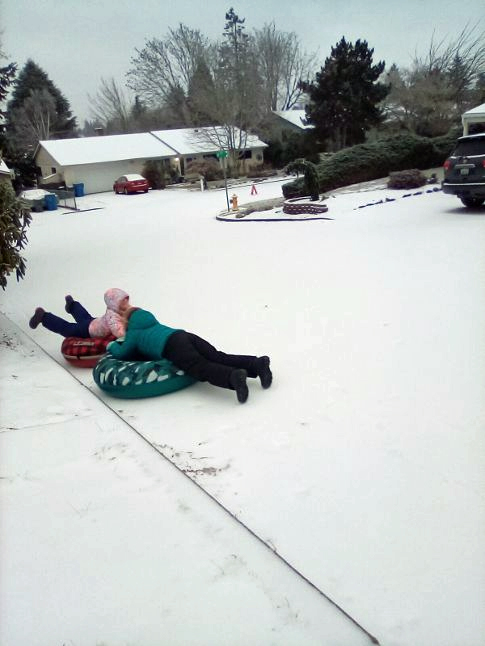
During a recent ice storm, I watched neighborhood kids sliding on the slope beside our house, sliding atop colorful snow tubes. Sliding on a bright blue toboggan, lightweight and made to zip down the slope. And wearing warm and water-resistant clothing.


Part of my brain went “Wow!” Another part of my brain got busy recalling the winter clothing and snow sliding equipment I had when I was their age and growing up in the Catskill Mountains. That part soon turned green with envy.


In the years after WWII, we made do with hand-me-down sleds. The narrow runners were prone to rust that had to be rubbed away with steel wool. One sled would accommodate only a single short person, or a taller person able to bend his knees in a snowsuit and stick his feet in the air if he belly flopped or draw his knees to his chin if he sat and steered with his feet. The other sled was longer and could accommodate two people, either sitting, or with one flopping on top of the other. Not much fun if you were the bottom flopper.

 Both sleds were more likely to give us splinters than smooth rides.

 Later we acquired a wooden toboggan. It was a varnished work of art. Four of us could sit on it. But unless we kept up with the waxing and unless the snow was perfect and the slope steep, it provided all the thrill of watching bread rise. Plus, because few slopes were free of stumps or shrubs or rocks, and steering was a joke, we often crashed or were dumped.

 On icy days, we slid on old cookie sheets and lobbied hard for those bowl-shaped snow sliders. I can’t recall whether we ever got one, but I expect it didn’t last long if we did. We weren’t especially gentle with our toys.

 Outside play was limited by the temperature, the layers we pulled on, and the water-resistance of our clothing. Back in the day, that wasn’t great. In fact, it was pathetic. Mittens and leather gloves got soaked through in no time. Snow sifted inside jackets without hoods, jackets that didn’t extend far below the waist. And, unless we donned those ugly black galoshes over our shoes and fastened them as tight as possible, our feet got wet, and our toes numb.

 All of that goes a long way toward explaining why, back in the day, I preferred to sit by the fireplace and read.

 And I still do.


Tuesday, December 6, 2022

Is It Dry Yet?

Carolyn J. Rose


It takes about three minutes to dry my hair these days. The hair dryer weighs maybe half a pound but blasts out hot air like a jet engine. Even though my hair is thick and shoulder length, it dries in the time it would take to make a hardboiled egg. 

Back in the day—the day being on a calendar from the 50s—my family didn’t own a hair dryer. Getting moisture from the strands took a heck of a lot longer.

     When I was still young enough that my mother washed my hair—probably while I argued that it wasn’t really dirty, shampoo would get in my eyes, and the water was too hot or too cold—the drying process involved my father. I’d be handed off to him along with a large towel and he’d do a kind of head massage thing.

     My father was six feet tall and strong, so the massage was brisk and not the epitome of gentle. It often felt like my head would come unscrewed from my neck and I’m amazed I didn’t get whiplash.

     What I did get was more knots than I’d had before the shampoo. Lots more knots. This was back before conditioner or detangling rinses, so these were serious knots, knots of all sizes.

     It was also my father’s job to comb my hair and work them loose. Dad was noted for a lot of things, but patience wasn’t high on the list. Often, frustrated by my hair and my attitude, he got a scissors and I got a trim.

     I was thrilled when we got our first hair dryer. But the thrill faded fast. The thing was heavy (at least two pounds), the nozzle was small, and the air that emerged was closer to warm than hot and had the velocity of a galloping sloth. It was quicker to sit by the fireplace and fluff my hair or bend over the floor grate above the furnace. That was risky because we had a wood furnace, and the grate was hot enough to sear a steak. Loose hair that fell on it sizzled and smoked.

     In the early 60s, I got a dryer with a bonnet so I could roll my wet hair and dry it while I did my homework. Provided I didn’t want to move farther than the length of the cord, had at least an hour of homework, and used plenty of rollers designed for maximum air circulation, that worked.

     By the end of the 60s I no longer rolled or teased my hair. It grew long and dried in the sun in Arizona. In the 70s it was cut in a wedge and took almost no time to dry with new and improved, light and powerful hair dryers. In the 80s I tortured my layered hair with perms and dried it slowly, twirling it on a brush to avoid frizz.

     Now I run my fingers through it as I aim the tiny dryer. No comb, no rollers, no brush. Sometimes I think of all the time this dryer and the I-don’t-much-care styling technique could have saved me during my childhood and teenage years.

 Then I give myself a reality check and admit I probably wouldn’t have used that time wisely.hair these days. The hair dryer

weighs maybe half a pound but blasts out hot air like a jet engine. Even
though my hair is thick and shoulder-length, it dries in the time it would take
to make a hardboiled egg.
Back in the day—the day being on a calendar from the 50s—my family didn’t
own a hair dryer. Getting moisture from the strands took a heck of a lot
longer.
When I was still young enough that my mother washed my hair—probably
while I argued that it wasn’t really dirty, shampoo would get in my eyes, and
the water was too hot or too cold—the drying process involved my father. I’d
be handed off to him along with a large towel and he’d do a kind of head
massage thing.
My father was six feet tall and strong, so the massage was brisk and not the
epitome of gentle. It often felt like my head would come unscrewed from my
neck and I’m amazed I didn’t get whiplash.
What I did get was more knots than I’d had before the shampoo. Lots more
knots. This was back before conditioner or detangling rinses, so these were
serious knots, knots of all sizes.
It was also my father’s job to comb my hair and work them loose. Dad was
noted for a lot of things, but patience wasn’t high on the list. Often,
frustrated by my hair and my attitude, he got a scissors and I got a trim.
I was thrilled when we got our first hair dryer. But the thrill faded fast. The
thing was heavy (at least two pounds), the nozzle was small, and the air that
emerged was closer to warm than hot and had the velocity of a galloping
sloth. It was quicker to sit by the fireplace and fluff my hair or bend over the
floor grate above the furnace. That was risky because we had a wood
furnace and the grate was hot enough to sear a steak. Loose hair that fell on
it sizzled and smoked.
In the early 60s, I got a dryer with a bonnet so I could roll my wet hair and
dry it while I did my homework. Provided I didn’t want to move farther than
the length of the cord, had at least an hour of homework, and used plenty of
rollers designed for maximum air circulation, that worked.
By the end of the 60s I no longer rolled or teased my hair. It grew long and
dried in the sun in Arizona. In the 70s it was cut in a wedge and took almost

no time to dry with new and improved, light and powerful hair dryers. In the
80s I tortured my layered hair with perms and dried it slowly, twirling it on a
brush to avoid frizz.
Now I run my fingers through it as I aim the tiny dryer. No comb, no rollers,
no brush. Sometimes I think of all the time this dryer and the I-don’t-much-
care styling technique could have saved me during my childhood and
teenage years.
Then I give myself a reality check and admit I probably wouldn’t have used
that time wisely.
Is It Dry Yet?
Carolyn J. Rose
It takes about three minutes to dry my hair these days. The hair dryer
weighs maybe half a pound but blasts out hot air like a jet engine. Even
though my hair is thick and shoulder-length, it dries in the time it would take
to make a hardboiled egg.
Back in the day—the day being on a calendar from the 50s—my family didn’t
own a hair dryer. Getting moisture from the strands took a heck of a lot
longer.
When I was still young enough that my mother washed my hair—probably
while I argued that it wasn’t really dirty, shampoo would get in my eyes, and
the water was too hot or too cold—the drying process involved my father. I’d
be handed off to him along with a large towel and he’d do a kind of head
massage thing.
My father was six feet tall and strong, so the massage was brisk and not the
epitome of gentle. It often felt like my head would come unscrewed from my
neck and I’m amazed I didn’t get whiplash.
What I did get was more knots than I’d had before the shampoo. Lots more
knots. This was back before conditioner or detangling rinses, so these were
serious knots, knots of all sizes.
It was also my father’s job to comb my hair and work them loose. Dad was
noted for a lot of things, but patience wasn’t high on the list. Often,
frustrated by my hair and my attitude, he got a scissors and I got a trim.
I was thrilled when we got our first hair dryer. But the thrill faded fast. The
thing was heavy (at least two pounds), the nozzle was small, and the air that
emerged was closer to warm than hot and had the velocity of a galloping
sloth. It was quicker to sit by the fireplace and fluff my hair or bend over the
floor grate above the furnace. That was risky because we had a wood
furnace and the grate was hot enough to sear a steak. Loose hair that fell on
it sizzled and smoked.
In the early 60s, I got a dryer with a bonnet so I could roll my wet hair and
dry it while I did my homework. Provided I didn’t want to move farther than
the length of the cord, had at least an hour of homework, and used plenty of
rollers designed for maximum air circulation, that worked.
By the end of the 60s I no longer rolled or teased my hair. It grew long and
dried in the sun in Arizona. In the 70s it was cut in a wedge and took almost
no time to dry with new and improved, light and powerful hair dryers. In the
80s I tortured my layered hair with perms and dried it slowly, twirling it on a
brush to avoid frizz.
Now I run my fingers through it as I aim the tiny dryer. No comb, no rollers,
no brush. Sometimes I think of all the time this dryer and the I-don’t-much-
care styling technique could have saved me during my childhood and
teenage years.
Then I give myself a reality check and admit I probably wouldn’t have used
that time wisely.
Carolyn J. Rose
It takes about three minutes to dry my hair these days. The hair dryer
weighs maybe half a pound but blasts out hot air like a jet engine. Even
though my hair is thick and shoulder-length, it dries in the time it would take
to make a hardboiled egg.
Back in the day—the day being on a calendar from the 50s—my family didn’t
own a hair dryer. Getting moisture from the strands took a heck of a lot
longer.
When I was still young enough that my mother washed my hair—probably
while I argued that it wasn’t really dirty, shampoo would get in my eyes, and
the water was too hot or too cold—the drying process involved my father. I’d
be handed off to him along with a large towel and he’d do a kind of head
massage thing.
My father was six feet tall and strong, so the massage was brisk and not the
epitome of gentle. It often felt like my head would come unscrewed from my
neck and I’m amazed I didn’t get whiplash.
What I did get was more knots than I’d had before the shampoo. Lots more
knots. This was back before conditioner or detangling rinses, so these were
serious knots, knots of all sizes.
It was also my father’s job to comb my hair and work them loose. Dad was
noted for a lot of things, but patience wasn’t high on the list. Often,
frustrated by my hair and my attitude, he got a scissors and I got a trim.
I was thrilled when we got our first hair dryer. But the thrill faded fast. The
thing was heavy (at least two pounds), the nozzle was small, and the air that
emerged was closer to warm than hot and had the velocity of a galloping
sloth. It was quicker to sit by the fireplace and fluff my hair or bend over the
floor grate above the furnace. That was risky because we had a wood
furnace and the grate was hot enough to sear a steak. Loose hair that fell on
it sizzled and smoked.
In the early 60s, I got a dryer with a bonnet so I could roll my wet hair and
dry it while I did my homework. Provided I didn’t want to move farther than
the length of the cord, had at least an hour of homework, and used plenty of
rollers designed for maximum air circulation, that worked.
By the end of the 60s I no longer rolled or teased my hair. It grew long and
dried in the sun in Arizona. In the 70s it was cut in a wedge and took almost
no time to dry with new and improved, light and powerful hair dryers. In the
80s I tortured my layered hair with perms and dried it slowly, twirling it on a
brush to avoid frizz.
Now I run my fingers through it as I aim the tiny dryer. No comb, no rollers,
no brush. Sometimes I think of all the time this dryer and the I-don’t-much-
care styling technique could have saved me during my childhood and
teenage years.
Then I give myself a reality check and admit I probably wouldn’t have used
that time wisely.

Tuesday, November 15, 2022

M I double ss I double ss I double P I

         Remember when people would invite you over to view slides of their recent vacation? And it was only the potato chips and clam dip that kept you from mumbling a lame excuse and bolting out the door when they showed you the fifth shot of them splashing water on each other at the hotel swimming pool?

        Well, this is going to be ‘zactly like that only different. No clam dip. No swimming pool. And no lame excuse needed. All you have to do is hit the esc key on your computer and boom, you’re outa there. Back to playing Wordle or playing Death Race 7000. Or whatever. Who’s gonna know? No harm, no foul.

        The problem with fulfilling one of the items on your bucket list is the prospect that it might be a profound disappointment. But when it came to our paddlewheel excursion up the Mississippi River (round trip New Orleans to New Orleans) this wasn’t the case. Don’t get me wrong, it was far from perfect. But there’s something about a view like this from the balcony of your stateroom, that makes you forget all of the small annoyances. 


I first visited New Orleans back in the 80’s when my radio station employer sent me out with a listener who’d won a trip to see the Sugar Ray Leonard-Roberto Duran prize fight. (The infamous No Mas fight) I remember thinking The Big Easy was vibrant, electric and a never-ending circus of people, music and fun. This trip it just felt seedy. I think my impression was epitomized by the street person we saw wearing a t-shirt that read “The Savage Life Chose Me.” The highlight of our time in N.O. was a bus tour around the city. Carolyn stayed in the room glued to a T.V. series that pitted aspiring moonshiners against each other in a distill-off judged by professional moonshiners. 


Our excursion off the boat in Natchez took us to a sprawling historical graveyard.

There were hundreds of acres worth of tombstones, monuments and above the ground family crypts. (protection against regular flooding) 

This solitary gravestone and its story tugged at our hearts.

 She was known as Louise the Unfortunate. In the late 19th century she came to Natchez to connect with her fiancee who had mysteriously vanished. (Or, alternately she found out he was already married.) She worked at a number of respectable jobs until hard times forced her to become a bar girl and ultimately a lady of the evening. She was befriended by a local doctor, who upon her death kept her from being in a pauper’s grave by buying this headstone in the local rich people’s cemetery.


\\


On our riverboat, the American Splendor we did some serious sightseeing, and ate splendidly in the spacious restaurant.


Creole shrimp, yum. For you Yankees, the stuff in the middle is grits. Pronounced greeyats.

There was a serious shortage of vegetarian options, but Carolyn got to know the chef and he made her several special dishes. And there were enough sides and deserts to keep her happy. 


There were lots of shipboard entertainment and education opportunities. I sat in on a series of morning water-color classes Carolyn tagged along acting as a combination cheerleader and heckler. (“You call that a musician painting? Cut off your ear, Vincent!!!)


Two of our excursions were especially memorable. The Cajun Pride Swamp Adventure took us deep into one of the bayous. 

Those are just what they look like. Big. Honkin.' Alligators. Cap'n Allen a veteran Cajun gator hunter (with a rapid fire accent so thick you caught about ever third word) gave us a lot of historical and nature information. At least I think that's what he was talking about. 

He told us that when a professional alligator hunter legally bagged an alligator, they used a power washer to clean it before harvesting the parts for sale. Apparently, gators carry around some unsavory diseases. (Are there savory diseases?) Who even knew gator hunter was a career choice? And me a liberal arts major. 

The gators got close to the boat and cap'n fed them marshmallows. Gators love marshmallows. Who knew? We also had a chance to pet a baby alligator. Strangely enough, Carolyn and I passed. 


Vicksburg was the site of one of the most decisive battles of the civil war. Control of shipping up and down the Mississippi hinged on it. Our guide was a great storyteller and filled us in on some little-known facts about the battle. 


Contrary to some accounts, the confederates didn’t surrender because they ran out of food. The truth is Grant outwitted the Confederate HMFDIC. 


Apparently General Lloyd Tighman (depicted here at the moment of his death) wasn't the sharpest sword in the scabbard and was easily outwitted by U.S. Grant.


Another highlight of our voyage was being allowed into the pilot house to talk to the paddle wheeler’s captain and pilot about the rigors of navigating a huge and everchanging waterway. I had just read Mark Twain’s “Life on the Mississippi” and marveled at the knowledge (and memory) it took to keep track of all the hazards on the river. Of course modern technology has simplified things some, but it’s still impressive.

This trip was special, despite some long airport lines, dealing with occasional whiners and little bumps in the road (river?) For anyone with a strong sense of history it's highly recommended. There's something magical about watching history roll by your balcony as you reread Huckleberry Finn while enjoying a complimentary bourbon and diet coke in the 4th floor lounge.